
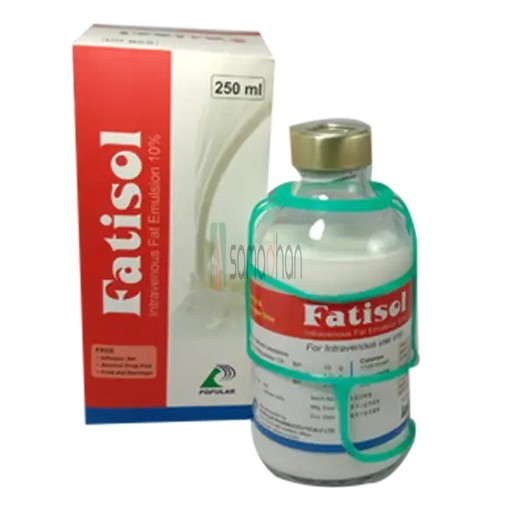
Fatisol 0.1 is a Product of the Generic Intravenous fat emulsion
Fatisol 0.1 belongs to the generic category of Intravenous fat emulsion. This medicine should be used according to a doctor's advice. We have provided detailed information about the uses, dosage, effectiveness, side effects, precautions, drug interactions, storage conditions, and other important details of Fatisol 0.1. Our goal is to present essential medicine information in one place for patients, caregivers, and healthcare professionals. To better understand Intravenous fat emulsion and ensure the safe use of this medicine, please read the information below carefully and consult a healthcare professional when necessary.
*Up to 10% Discount
(Depends on pharmacy)
Fatisol 0.1
Popular Pharmaceuticals Ltd. · IV Infusion
Intravenous fat emulsion
/ 250 ml bottle
Description of Fatisol 0.1
Fatisol 0.1 may be available as a prescription or over-the-counter medicine, depending on local regulations and medical recommendations. It is used for the treatment and management of specific conditions or symptoms. The way this medicine is used may vary depending on the patient's condition and the advice of a healthcare provider. Detailed information about the approved uses, therapeutic applications, and other relevant details of Fatisol 0.1 is provided below to help users gain a clear understanding of this medicine.
What Is Fatisol 0.1 Indications and Uses?
Intravenous Fat Emulsion is a source of calories and essential fatty acids for patients requiring parenteral nutrition for extended periods of time (usually for >5 days). It is a source of essential fatty acids when a deficiency occurs. Part of the intravenous diet in all parenteral nutrition indications ... Read moreIntravenous Fat Emulsion is a source of calories and essential fatty acids for patients requiring parenteral nutrition for extended periods of time (usually for >5 days). It is a source of essential fatty acids when a deficiency occurs. Part of the intravenous diet in all parenteral nutrition indications including:
Preoperative and postoperative nutritional disturbances where an improved nitrogen balance is required;
Nutritional disorders or disturbances of nitrogen balance due to inadequate or failing intestinal absorption caused by tumours in the gastrointestinal tract, acute or chronic intestinal diseases (peritonitis, ulcerative colitis, terminal ileitis);
Burns, to reduce the frequently excessive nitrogen losses; Prolonged unconsciousness, eg. following cranial trauma or poisoning in cases where enteral feeding is inappropriate or impossible;
Impaired renal function where a concentrated source of energy may be indicated to reduce protein breakdown;
Cachexia and Patients with essential fatty acid deficiency who cannot maintain or restore a normal essential fatty acid pattern by oral intake.
Pharmacology (Source, Chemical and Physical Composition) Of Fatisol 0.1
Intravenous Fat Emulsion is a preparation of 10% refined soyabean oil intended to be used as an intravenous nutrient. Intravenous fat emulsion prevents Essential Fatty Acid Deficiency (EFAD) and corrects the clinical manifestations of EFAD. However, for patients requiring complete parenteral nutrition, complementary vitamin supplements are required.Intravenous Fat Emulsion are prepared from either soyabean or safflower oil and provide a mixture of neutral triglycerides, predominantly unsaturated fatty acids. The major components of fatty acids are linoleic, oleic, palmitic acids. In addition, Fatisol contains 1.2% egg yolk phospholipids as an emulsifier and glycerol to adjust tonicity. IV Fat emulsions are isotonic and may be given by central or peripheral venous route. Fatisol is formulated as a concentrated source of energy to be used together with carbohydrates and amino acids in parenteral nutrition, it is isotonic, and provides a source of basal phosphate requirements and a source of vitamin E.
Dosage And Administration of Fatisol 0.1
Total Parenteral nutrition: As a part of TPN, administer IV via a peripheral vein or by central venous catheter. Fat emulsion should comprise no more than 60% of the patient's total caloric intake, with carbohydrates and amino acids comprising the remaining 40% or more of caloric intake. Adult: Initial infusion rate is 1ml/min for the first 15 to 30 mins. If no adverse reactions occur, the infusion rate can be increased to 2 ml/min. Infuse only 500 ml the first day and increase dose the following day. Do not exceed a daily dosage of 2.5 g/kg.Children: Initial infusion rate is 0.1ml/min for the first 10 to 15 mins. If no adverse reactions occur, the infusion rate can be increased to 1g/kg in 4 hours. Do not exceed a daily dosage of 3 g/kg. Infants: Starts at 0.5 g/kg/24 hours and may be increased in relation to the infant's ability to eliminate fat. The maximum recommended dosage is 3g/kg/24 hours. Fatty acid deficiency: To correct EFAD, supply 8% to 10% of the caloric intake by IV fat emulsion to provide an adequate amount of linoleic acid. The left over contents of opened bottles should be discarded & not saved for later use.Do not use any bottles in which there appears to be separation of the emulsion.
Drug Interactions of Fatisol 0.1
Some drugs, like insulin, may interfere with the body's lipase system. This kind of interaction seems, however, to be of only limited clinical importance. Heparin in clinical doses causes a transient increase in lipolysis in plasma, resulting in a transient decrease in triglyceride clearance due to depletion of lipoprotein lipase.
Side Effects of Fatisol 0.1
Intravenous fat emulsion may cause a rise in body temperature (incidence <3%) and, less frequently, shivering, chills and nausea/vomiting (incidence <1%). Reports of other adverse events in conjunction with 10% fat emulsion infusion are extremely rare, less than one report of certain events per one million infusions. Hypersensitivity reactions (anaphylactic reaction, skin rash, urticaria), respiratory symptoms are not (tachypnoea) and circulatory effects (hypertension, hypotension) have been described. Thrombosis, haemolysis, reticulocytosis, abdominal pain, tiredness, priapism and neurological adverse reactions including headaches, flushing, dyspnoea, slight pressure over the eyes and dizziness have been reported.
Use During Pregnancy and Lactation
Absolute safety of the foetus and the nursing infant has not been established. Therefore, Intravenous fat emulsion should be administered with caution during pregnancy and lactation.
Precautions And Warnings for Fatisol 0.1
This contains soya oil and egg lecithin which may rarely cause allergic reactions. Cross allergic reaction has been observed between soya-bean and peanut. Fat metabolism may be disturbed in conditions such as renal insufficiency, uncompensated diabetes, pancreatitis, certain forms of liver insufficiency, metabolic disorders and sepsis. Fatisol should be administered with caution as a strong correlation exists between C-reactive protein and the agglutination of Fatisol in seriously ill patients. Fatisol should be given with caution to neonates and premature infants with hyperbilirubinaemia and in cases with suspected pulmonary hypertension. In low birthweight infants, the risk of lipid infusions may outweigh potential benefits due to further diminution of defences against infection. In infants, metabolism of lipids in peripheral tissues may be diminished by infection and heparin administration. In neonates receiving long term parenteral nutrition, particularly premature neonates, platelet count, liver function tests and serum triglyceride concentration should be monitored.
Therapeutic Class
Parenteral nutritional preparations
Storage Conditions of It
Store at 15°C to 30°C in a dry place protected from light. Keep out of reach of children. Do not use if there is evidence of excessive creaming or aggregation, if excessive free oil droplets are visible, if the bag is leaking or if the bottle is damaged, solution is frozen, discolored or contains particles. The left over contents of opened bag or bottles should be discarded & not saved for later use. This contains no preservatives.
Data Source: Data source of Indications and Usages, Pharmacology, Dosage & Administration, Drug Interactions, Side Effects, Use during Pregnancy & Lactation, Precautions & Warnings, Use in Special Populations, Therapeutic Class, and Storage Conditions is the concerned medicine company or respective organization.
Alternative Medicines
⚠ Disclaimer
The information provided on All Samadhan is intended for general informational purposes only and is prepared based on our best practices. It is not a substitute for professional medical advice, diagnosis, or treatment. While we strive to keep the information accurate and up to date, we do not guarantee its completeness or accuracy. The absence of specific information or warnings about any medicine or service should not be considered as an assurance or endorsement by All Samadhan. All Samadhan shall not be held responsible for any consequences arising from the use of this information. We strongly recommend consulting a qualified healthcare professional or physician for any medical concerns, questions, or clarifications.All Samadhan is a digital healthcare software platform operated by MS Genius Experts. We provide technology solutions for pharmacies and healthcare providers; we are not a direct seller or dispenser of prescription medicines

N.B.: All Samadhan is a digital healthcare software platform operated by MS Genius Experts. We provide technology solutions for pharmacies and healthcare providers; we are not a direct seller or dispenser of prescription medicines.
Copyright © All Samadhan - Operated by M/S. Genius Experts | All Rights Reserved
DBID
Registration ID: 176322642
Trade License: TRAD/DNCC/040904/2023