
Evrysdi 0.75 mg/ml is a Product of the Generic Risdiplam
Evrysdi 0.75 mg/ml belongs to the generic category of Risdiplam. This medicine should be used according to a doctor's advice. We have provided detailed information about the uses, dosage, effectiveness, side effects, precautions, drug interactions, storage conditions, and other important details of Evrysdi 0.75 mg/ml. Our goal is to present essential medicine information in one place for patients, caregivers, and healthcare professionals. To better understand Risdiplam and ensure the safe use of this medicine, please read the information below carefully and consult a healthcare professional when necessary.
*Up to 10% Discount
(Depends on pharmacy)
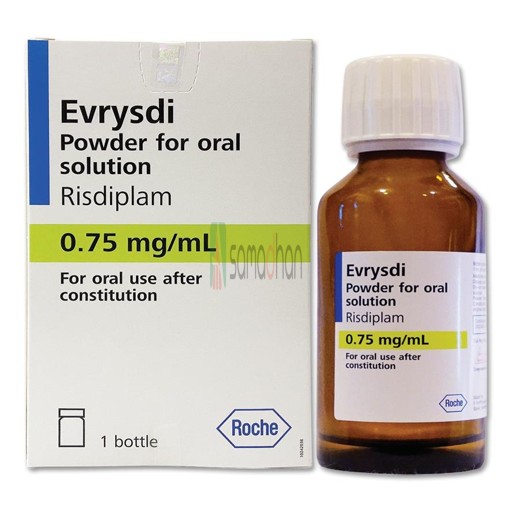
Evrysdi 0.75 mg/ml
Roche Bangladesh Ltd. · Oral Solution
Risdiplam
/ 60 mg bottle
Description of Evrysdi 0.75 mg/ml
Evrysdi 0.75 mg/ml may be available as a prescription or over-the-counter medicine, depending on local regulations and medical recommendations. It is used for the treatment and management of specific conditions or symptoms. The way this medicine is used may vary depending on the patient's condition and the advice of a healthcare provider. Detailed information about the approved uses, therapeutic applications, and other relevant details of Evrysdi 0.75 mg/ml is provided below to help users gain a clear understanding of this medicine.
What Is Evrysdi 0.75 mg/ml Indications and Uses?
Risdiplam is indicated for the treatment of spinal muscular atrophy (SMA) in pediatric and adult patients.
Pharmacology (Source, Chemical and Physical Composition) Of Evrysdi 0.75 mg/ml
Risdiplam is a survival of motor neuron 2 (SMN2) splicing modifier designed to treat patients with spinal muscular atrophy (SMA) caused by mutations in chromosome 5q that lead to SMN protein deficiency. Using in vitro assays and studies in transgenic animal models of SMA, risdiplam was shown to increase exon 7 inclusion in SMN2 messenger ribonucleic acid (mRNA) transcripts and production of full-length SMN protein in the brain. In vitro and in vivo data indicate that risdiplam may cause alternative splicing of additional genes, including FOXM1 and MADD. FOXM1 and MADD are thought to be involved in cell cycle regulation and apoptosis, respectively, and have been identified as possible contributors to adverse effects seen in animals.
Dosage And Administration of Evrysdi 0.75 mg/ml
Dose Preparation: It is recommended that a healthcare provider discuss with the patient or caregiver how to prepare the prescribed daily dose prior to administration of the first dose. Instruct patients or caregivers to prepare the dose using the reusable oral syringe provided. Risdiplam must be taken immediately after it is drawn up into the oral syringe. If Risdiplam is not taken within 5 minutes, Risdiplam should be discarded from the oral syringe, and a new dose should be prepared.Dose Administration: Risdiplam is taken orally once daily after a meal at approximately the same time each day. In infants who are breastfed, Risdiplam should be administered after breastfeeding. Risdiplam cannot be mixed with formula or milk. Instruct patients to drink water after taking Risdiplam to ensure the drug has been completely swallowed. If the patient is unable to swallow and has a nasogastric or gastrostomy tube, Risdiplam can be administered via the tube. The tube should be flushed with water after delivering Risdiplam.Risdiplam is administered orally once daily. The recommended dosage is determined by age and body weight-
Less than 2 months of age: 0.15 mg/kg
2 months to less than 2 years of age: 0.2 mg/kg
2 years of age and older weighing less than 20 kg: 0.25 mg/kg
2 years of age and older weighing 20 kg or more: 5 mg
Drug Interactions of Evrysdi 0.75 mg/ml
Avoid coadministration with drugs that are substrates of multidrug and toxin extrusion (MATE) transporters.
Side Effects of Evrysdi 0.75 mg/ml
The most common adverse reactions in later-onset SMA (incidence at least 10% of patients treated with Risdiplam and more frequent than control) were fever, diarrhea, and rash. The most common adverse reactions in infantile-onset SMA were similar to those observed in later-onset SMA patients. Additionally, adverse reactionswith an incidence of at least 10% were upper respiratory tract infection, lower respiratory tract infection, constipation, vomiting, and cough.
Use During Pregnancy and Lactation
There are no adequate data on the developmental risk associated with the use of risdiplam in pregnant women. There are no data on the presence of risdiplam in human milk, the effects on the breastfed infant, or the effects on milk production. Risdiplam was excreted in the milk of lactating rats orally administered risdiplam.
Use In Special Populations
Pediatric Use: The safety and effectiveness of Risdiplam in pediatric patients (neonates and older) have been established.Geriatric Use: Clinical studies of Risdiplam did not include patients aged 65 years and older to determine whether they respond differently from younger adult patients.
Storage Conditions of It
Store the dry powder at 20°C to 25°C. Keep out of reach of children.
Data Source: Data source of Indications and Usages, Pharmacology, Dosage & Administration, Drug Interactions, Side Effects, Use during Pregnancy & Lactation, Precautions & Warnings, Use in Special Populations, Therapeutic Class, and Storage Conditions is the concerned medicine company or respective organization.
Alternative Medicines
⚠ Disclaimer
The information provided on All Samadhan is intended for general informational purposes only and is prepared based on our best practices. It is not a substitute for professional medical advice, diagnosis, or treatment. While we strive to keep the information accurate and up to date, we do not guarantee its completeness or accuracy. The absence of specific information or warnings about any medicine or service should not be considered as an assurance or endorsement by All Samadhan. All Samadhan shall not be held responsible for any consequences arising from the use of this information. We strongly recommend consulting a qualified healthcare professional or physician for any medical concerns, questions, or clarifications.All Samadhan is a digital healthcare software platform operated by MS Genius Experts. We provide technology solutions for pharmacies and healthcare providers; we are not a direct seller or dispenser of prescription medicines

N.B.: All Samadhan is a digital healthcare software platform operated by MS Genius Experts. We provide technology solutions for pharmacies and healthcare providers; we are not a direct seller or dispenser of prescription medicines.
Copyright © All Samadhan - Operated by M/S. Genius Experts | All Rights Reserved
DBID
Registration ID: 176322642
Trade License: TRAD/DNCC/040904/2023