
Edopain ER 600 mg is a Product of the Generic Etodolac
Edopain ER 600 mg belongs to the generic category of Etodolac. This medicine should be used according to a doctor's advice. We have provided detailed information about the uses, dosage, effectiveness, side effects, precautions, drug interactions, storage conditions, and other important details of Edopain ER 600 mg. Our goal is to present essential medicine information in one place for patients, caregivers, and healthcare professionals. To better understand Etodolac and ensure the safe use of this medicine, please read the information below carefully and consult a healthcare professional when necessary.
*Up to 10% Discount
(Depends on pharmacy)
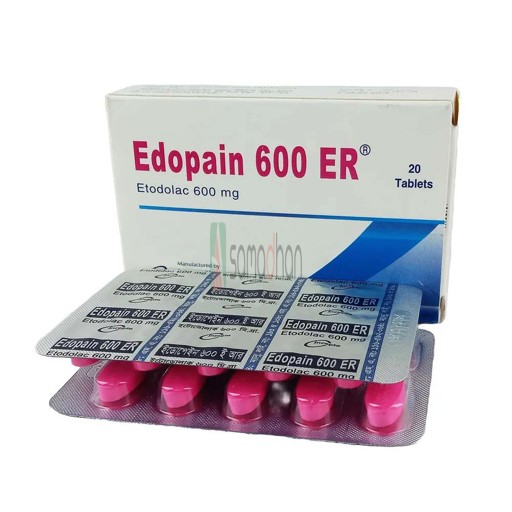
Edopain ER 600 mg
Incepta Pharmaceuticals Ltd. · Tablet (Extended Release)
Etodolac
/ Piece
Description of Edopain ER 600 mg
Edopain ER 600 mg may be available as a prescription or over-the-counter medicine, depending on local regulations and medical recommendations. It is used for the treatment and management of specific conditions or symptoms. The way this medicine is used may vary depending on the patient's condition and the advice of a healthcare provider. Detailed information about the approved uses, therapeutic applications, and other relevant details of Edopain ER 600 mg is provided below to help users gain a clear understanding of this medicine.
What Is Edopain ER 600 mg Indications and Uses?
Etodolac is indicated-
For acute and long-term use in the management of signs and symptoms: Osteoarthritis, Rheumatoid arthritis
For the management of acute pain
Acute gout
Pharmacology (Source, Chemical and Physical Composition) Of Edopain ER 600 mg
Similar to other NSAIDs, the anti-inflammatory effects of etodolac result from inhibition of the enzyme cycooxygenase (COX). This decreases the synthesis of peripheral prostaglandins involved in mediating inflammation. Etodolac binds to the upper portion of the COX enzyme active site and prevents its substrate, arachidonic acid, from entering the active site. Etodolac was previously thought to be a non-selective COX inhibitor, but it is now known to be 5-50 times more selective for COX-2 than COX-1. Antipyresis may occur by central action on the hypothalamus, resulting in peripheral dilation, increased cutaneous blood flow, and subsequent heat loss.
Dosage And Administration of Edopain ER 600 mg
Adults and over 18 years:
Etodolac 300 mg capsule: 600 mg daily in 1-2 divided doses
Etodolac 600 mg ER tablet: Once daily
Pediatric: Safety and effectiveness in pediatric patients below the age of 18 years have not been established.
Drug Interactions of Edopain ER 600 mg
Reports suggest that NSAIDs may diminish the antihypertensive effect of ACE-inhibitors. This interaction should be given consideration in patients taking NSAIDs concomitantly with ACE-inhibitors. When Etodolac is administered with Aspirin, its protein binding is reduced, although the clearance of free Etodolac is not altered. The clinical significance of this interaction is not known; however, as with other NSAIDs, concomitant administration of Etodolac and Aspirin is not generally recommended because of the potential of increased adverse effects.
Side Effects of Edopain ER 600 mg
The common side effects of Etodolac involve the gastrointestinal system. It can cause abdominal pain, constipation, diarrhea, dyspepsia, flatulence, heartburn, nausea, Gl ulcers, vomiting. Other events including abnormal renal function, anemia, dizziness, edema, elevated liver enzymes, headaches, increased bleeding time, pruritis, rashes, tinnitus etc.
Use During Pregnancy and Lactation
There are no adequate and well-controlled studies in pregnant women. It should be used in pregnancy only if the potential benefit justifies the potential risk to the fetus. It is not known whether Etodolac is excreted in human milk. A decision should be made whether to discontinue nursing or to discontinue the drug taking into account the importance of the drug to the mother.
Precautions And Warnings for Edopain ER 600 mg
Etodolac should be given with caution in patients with severe hepatic reactions, pre existing asthma, fluid retention, hypertension or heart failure. If clinical sings and symptoms consistent with liver disease develop, or if systemic manifestations occur (e.g. eosinophilia, rash etc.), it should be discontinued.
Therapeutic Class
Drugs for Osteoarthritis, Drugs used for Rheumatoid Arthritis, Non-steroidal Anti-inflammatory Drugs (NSAIDs)
Storage Conditions of It
Do not store above 30°C. Keep away from light and out of the reach of children.
Data Source: Data source of Indications and Usages, Pharmacology, Dosage & Administration, Drug Interactions, Side Effects, Use during Pregnancy & Lactation, Precautions & Warnings, Use in Special Populations, Therapeutic Class, and Storage Conditions is the concerned medicine company or respective organization.
Alternative Medicines
⚠ Disclaimer
The information provided on All Samadhan is intended for general informational purposes only and is prepared based on our best practices. It is not a substitute for professional medical advice, diagnosis, or treatment. While we strive to keep the information accurate and up to date, we do not guarantee its completeness or accuracy. The absence of specific information or warnings about any medicine or service should not be considered as an assurance or endorsement by All Samadhan. All Samadhan shall not be held responsible for any consequences arising from the use of this information. We strongly recommend consulting a qualified healthcare professional or physician for any medical concerns, questions, or clarifications.All Samadhan is a digital healthcare software platform operated by MS Genius Experts. We provide technology solutions for pharmacies and healthcare providers; we are not a direct seller or dispenser of prescription medicines

N.B.: All Samadhan is a digital healthcare software platform operated by MS Genius Experts. We provide technology solutions for pharmacies and healthcare providers; we are not a direct seller or dispenser of prescription medicines.
Copyright © All Samadhan - Operated by M/S. Genius Experts | All Rights Reserved
DBID
Registration ID: 176322642
Trade License: TRAD/DNCC/040904/2023