
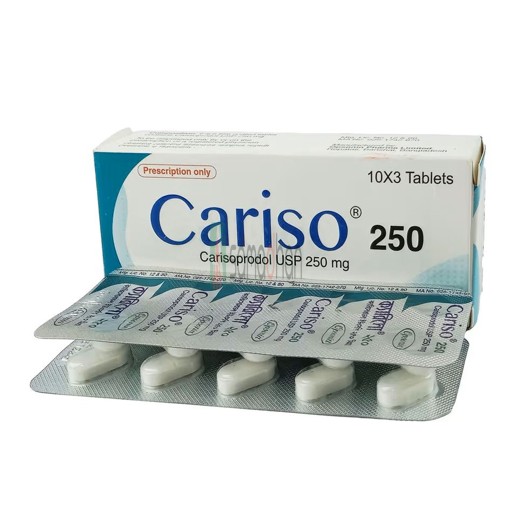
Cariso 250 mg is a Product of the Generic Carisoprodol
Cariso 250 mg belongs to the generic category of Carisoprodol. This medicine should be used according to a doctor's advice. We have provided detailed information about the uses, dosage, effectiveness, side effects, precautions, drug interactions, storage conditions, and other important details of Cariso 250 mg. Our goal is to present essential medicine information in one place for patients, caregivers, and healthcare professionals. To better understand Carisoprodol and ensure the safe use of this medicine, please read the information below carefully and consult a healthcare professional when necessary.
*Up to 10% Discount
(Depends on pharmacy)
Cariso 250 mg
Opsonin Pharma Ltd. · Tablet
Carisoprodol
/ Piece
Description of Cariso 250 mg
Cariso 250 mg may be available as a prescription or over-the-counter medicine, depending on local regulations and medical recommendations. It is used for the treatment and management of specific conditions or symptoms. The way this medicine is used may vary depending on the patient's condition and the advice of a healthcare provider. Detailed information about the approved uses, therapeutic applications, and other relevant details of Cariso 250 mg is provided below to help users gain a clear understanding of this medicine.
What Is Cariso 250 mg Indications and Uses?
Carisoprodol is indicated for-
The relief of discomfort associated with acute, painful musculoskeletal conditions in adults.
Sedation and decrease anxiety in patients with severe pain.
Used as an adjunct in physical therapy in injuries.
Pharmacology (Source, Chemical and Physical Composition) Of Cariso 250 mg
Carisoprodol is a GABA-A receptor indirect agonist with CNS chloride channel conductance effect. GABA receptor agonists typically produce sedative effect and may also cause other effects such as anxiolytic, anticonvulsant and muscle relaxant. Metabolite of Carisoprodol, Meprobamate, has anxiolytic and sedative properties. Carisoprodol decreases the impulses from brain and spinal cord to the muscle. This causes the muscle to relax and hence decrease the spasm. It has no direct action on muscle itself.
Dosage And Administration of Cariso 250 mg
Adults (18 years and older): The recommended dose of Carisoprodol is 250 mg to 350 mg three times a day and at bedtime. The recommended maximum duration of Carisoprodol use is up to two or three weeks. Caution should be taken in patients with renal and hepatic impairment and also with reduced CYP2C19 activity.
Drug Interactions of Cariso 250 mg
Caution should be exercised with patients who take other CNS depressants (eg. alcohol, benzodiazepines, opioids, tricyclic antidepressants) with Carisoprodol.
Co-administration of CYP2C19 inhibitors (Omeprazole, Fluvoxamine) with Carisoprodol could result in increased exposure of Carisoprodol. Co-administration of CYP2C19 inducers (Rifampin) with Carisoprodol could result in decreased exposure of arisoprodol.
Side Effects of Cariso 250 mg
Common side effects are drowsiness, dizziness and headache.
Use During Pregnancy and Lactation
Pregnancy category C. Maternal use of Carisoprodol may lead to reduced or less effective infant feeding (due to sedation) and/or decresed milk production. Caution should be exercised when Carisoprodol is administered to a nursing woman.
Precautions And Warnings for Cariso 250 mg
Due to sedative properties, may impair ability to perform hazardous tasks such as driving or operating machinery. Additive sedative effects when used with other CNS depressants including alcohol. Cases of Drug Dependence, Withdrawal, and Abuse. Seizures
Therapeutic Class
Locally acting Skeletal Muscle Relaxants
Storage Conditions of It
Store in cool and dry place at room temperature 20°-25°C, away from direct light. Keep out reach of children.
Data Source: Data source of Indications and Usages, Pharmacology, Dosage & Administration, Drug Interactions, Side Effects, Use during Pregnancy & Lactation, Precautions & Warnings, Use in Special Populations, Therapeutic Class, and Storage Conditions is the concerned medicine company or respective organization.
Alternative Medicines
⚠ Disclaimer
The information provided on All Samadhan is intended for general informational purposes only and is prepared based on our best practices. It is not a substitute for professional medical advice, diagnosis, or treatment. While we strive to keep the information accurate and up to date, we do not guarantee its completeness or accuracy. The absence of specific information or warnings about any medicine or service should not be considered as an assurance or endorsement by All Samadhan. All Samadhan shall not be held responsible for any consequences arising from the use of this information. We strongly recommend consulting a qualified healthcare professional or physician for any medical concerns, questions, or clarifications.All Samadhan is a digital healthcare software platform operated by MS Genius Experts. We provide technology solutions for pharmacies and healthcare providers; we are not a direct seller or dispenser of prescription medicines

N.B.: All Samadhan is a digital healthcare software platform operated by MS Genius Experts. We provide technology solutions for pharmacies and healthcare providers; we are not a direct seller or dispenser of prescription medicines.
Copyright © All Samadhan - Operated by M/S. Genius Experts | All Rights Reserved
DBID
Registration ID: 176322642
Trade License: TRAD/DNCC/040904/2023