
Carbeshot 100 mcg/ml is a Product of the Generic Carbetocin
Carbeshot 100 mcg/ml belongs to the generic category of Carbetocin. This medicine should be used according to a doctor's advice. We have provided detailed information about the uses, dosage, effectiveness, side effects, precautions, drug interactions, storage conditions, and other important details of Carbeshot 100 mcg/ml. Our goal is to present essential medicine information in one place for patients, caregivers, and healthcare professionals. To better understand Carbetocin and ensure the safe use of this medicine, please read the information below carefully and consult a healthcare professional when necessary.
*Up to 10% Discount
(Depends on pharmacy)
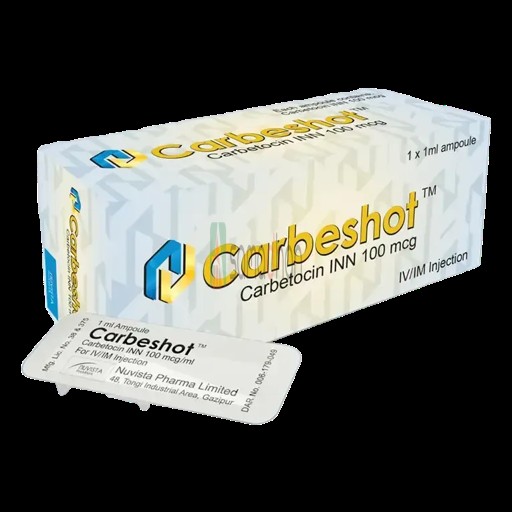
Carbeshot 100 mcg/ml
Nuvista Pharma Ltd. · IV Injection
Carbetocin
/ 1 ml ampoule
Description of Carbeshot 100 mcg/ml
Carbeshot 100 mcg/ml may be available as a prescription or over-the-counter medicine, depending on local regulations and medical recommendations. It is used for the treatment and management of specific conditions or symptoms. The way this medicine is used may vary depending on the patient's condition and the advice of a healthcare provider. Detailed information about the approved uses, therapeutic applications, and other relevant details of Carbeshot 100 mcg/ml is provided below to help users gain a clear understanding of this medicine.
What Is Carbeshot 100 mcg/ml Indications and Uses?
Carbetocin is indicated for the prevention of uterine atony and postpartum haemorrhage (excessive bleeding) following delivery of the infant by elective caesarean section under epidural or spinal anaesthesia.
Pharmacology (Source, Chemical and Physical Composition) Of Carbeshot 100 mcg/ml
Carbetocin is a drug used to control postpartum hemorrhage, bleeding after giving birth. It is an analogue of oxytocin, and its action is similar to that of oxytocin; it causes contraction of the uterus. Carbetocin binds to oxytocin receptors present on the smooth musculature of the uterus, resulting in rhythmic contractions of the uterus, increased frequency of existing contractions, and increased uterine tone. The oxytocin receptor content of the uterus is very low in the non-pregnant state, and increases during pregnancy, reaching a peak at the time of delivery.
Dosage And Administration of Carbeshot 100 mcg/ml
A single intravenous dose of 100 mcg of carbetocin injection is administered by bolus injection, slowly over 1 minute, only when infant delivery has been completed by caesarean section under epidural or spinal anaesthesia. carbetocin is to be used as a single dose only.
Drug Interactions of Carbeshot 100 mcg/ml
No specific drug interactions have been reported with carbetocin.
Side Effects of Carbeshot 100 mcg/ml
10-40% of patients experienced nausea, vomiting, abdominal pain, itching skin, increased body temperature, trembling and weakness. Infrequent adverse events (1-5% of patients) included back pain, dizziness, metallic taste, anaemia, sweating, chest pain, dyspnoea, chills, tachycardia and anxiety.
Use During Pregnancy and Lactation
Use of carbetocin injection is contraindicated during pregnancy. Small amounts of carbetocin has been shown to cross over from plasma into the breast milk of nursing women. The small amount of carbetocin ingested by infant would not be expected to present a significant safety concern.
Precautions And Warnings for Carbeshot 100 mcg/ml
In patients who may not have an adequate uterine contraction after a single injection of carbetocin, more aggressive treatment with additional doses of oxytocin or ergometrine is warranted.
As carbetocin is closely related in structure to oxytocin, hyponatraemia may occur.
Carbetocin should be used cautiously in the presence of epilepsy, migraine, asthma or any state in which a rapid addition to extracellular water may produce hazard for an already overburdened system.
Patients with eclampsia and pre-eclampsia should be monitored for changes in blood pressure.
Carbetocin is not recommended for use in elderly patients.
Therapeutic Class
Drugs acting on the Uterus
Storage Conditions of It
Store at 2-8°C. Do not freeze. Keep away from light. Once the ampoule has been opened, the product should be used immediately.
Data Source: Data source of Indications and Usages, Pharmacology, Dosage & Administration, Drug Interactions, Side Effects, Use during Pregnancy & Lactation, Precautions & Warnings, Use in Special Populations, Therapeutic Class, and Storage Conditions is the concerned medicine company or respective organization.
Alternative Medicines
⚠ Disclaimer
The information provided on All Samadhan is intended for general informational purposes only and is prepared based on our best practices. It is not a substitute for professional medical advice, diagnosis, or treatment. While we strive to keep the information accurate and up to date, we do not guarantee its completeness or accuracy. The absence of specific information or warnings about any medicine or service should not be considered as an assurance or endorsement by All Samadhan. All Samadhan shall not be held responsible for any consequences arising from the use of this information. We strongly recommend consulting a qualified healthcare professional or physician for any medical concerns, questions, or clarifications.All Samadhan is a digital healthcare software platform operated by MS Genius Experts. We provide technology solutions for pharmacies and healthcare providers; we are not a direct seller or dispenser of prescription medicines

N.B.: All Samadhan is a digital healthcare software platform operated by MS Genius Experts. We provide technology solutions for pharmacies and healthcare providers; we are not a direct seller or dispenser of prescription medicines.
Copyright © All Samadhan - Operated by M/S. Genius Experts | All Rights Reserved
DBID
Registration ID: 176322642
Trade License: TRAD/DNCC/040904/2023