
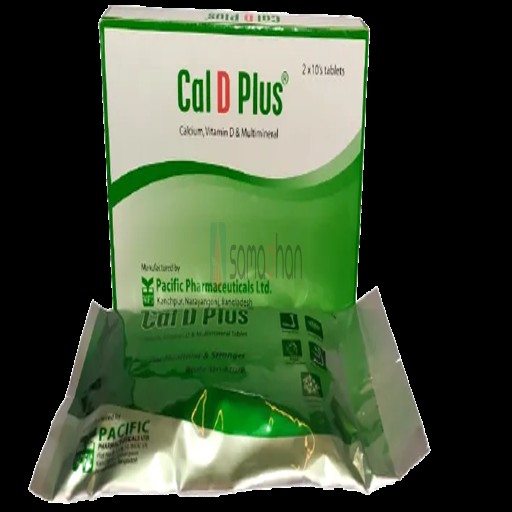
Cal D Plus N/A is a Product of the Generic Calcium + Vitamin D3 + Multimineral
Cal D Plus N/A belongs to the generic category of Calcium + Vitamin D3 + Multimineral. This medicine should be used according to a doctor's advice. We have provided detailed information about the uses, dosage, effectiveness, side effects, precautions, drug interactions, storage conditions, and other important details of Cal D Plus N/A. Our goal is to present essential medicine information in one place for patients, caregivers, and healthcare professionals. To better understand Calcium + Vitamin D3 + Multimineral and ensure the safe use of this medicine, please read the information below carefully and consult a healthcare professional when necessary.
*Up to 10% Discount
(Depends on pharmacy)
Cal D Plus N/A
Pacific Pharmaceuticals Ltd. · Tablet
Calcium + Vitamin D3 + Multimineral
/ Piece
Description of Cal D Plus N/A
Cal D Plus N/A may be available as a prescription or over-the-counter medicine, depending on local regulations and medical recommendations. It is used for the treatment and management of specific conditions or symptoms. The way this medicine is used may vary depending on the patient's condition and the advice of a healthcare provider. Detailed information about the approved uses, therapeutic applications, and other relevant details of Cal D Plus N/A is provided below to help users gain a clear understanding of this medicine.
What Is Cal D Plus Indications and Uses?
This preparation is indicated in-
Prevention and treatment of osteoporosis
To maintain strong bone growth
For proper functioning of heart, muscle and nerves
As nutritional supplement
For bone development and regeneration of bone
Pregnancy & lactation
Deficiency state of Calcium, Vitamin D3, Magnesium, Zinc, Copper, Manganese & Boron
Pharmacology (Source, Chemical and Physical Composition) Of Cal D Plus
Nutrition is the most important to prevent osteoporosis and other bone related diseases. Calcium, Magnesium & Vitamin D3 are the macronutrients for bone. Without Vitamin D3 very little Calcium is absorbed. Like Calcium, Magnesium increases bone strength and rigidity. Recent epidemiological studies showed that some micronutrients like Copper, Manganese, Zinc & Boron play an important role in bone health. Deficiency of the micronutrients is noticed in patients with osteoporosis.
Dosage And Administration of Cal D Plus
Adult: 1 film-coated tablet twice daily, preferably 1 tablet in the morning and 1 tablet in the evening or as directed by physician. It is best taken with or just after main meals with a full glass of water.Children 3-7 years: 1 effervescent tablet daily.7 years to older: 1 to 2 effervescent tablet daily.
Drug Interactions of Cal D Plus
The risk of hypercalcemia should be considered in patients taking thiazide diuretics since these drugs can reduce urinary calcium excretion. Hypocalcaemia must be avoided in digitalized patients. Certain foods (e.g. those containing oxalic acid, phosphate or phytinic acid) may reduce the absorption of calcium. Concomitant treatment with phenytoin or barbiturates can decrease the effect of Vitamin-D 3 because of metabolic activation. Concomitant use of glucocorticoids can decrease the effect of Vitamin D3. The effects of digitalis and other cardiac glycosides may be attenuated with the oral administration of calcium combined with Vitamin-D 3 . Strict medical supervision is needed and, if necessary monitoring of ECG and calcium. Calcium salts may reduce the absorption of thyroxin, bisphosphonates, sodium fluoride, quinolone or tetracycline antibiotics or iron. It is advisable to allow a minimum period of four hours before taking the calcium.
Side Effects of Cal D Plus
The use of calcium supplements has rarely given rise to mild gastro-intestinal disturbances such as constipation, flatulence, nausea, gastric pain, diarrhea. Following administration of vitamin-D3 supplements occasional skin rash has been reported. Hypercalciuria and in rare cases hypercalcaemia have been seen with long term treatment at high doses.
Use During Pregnancy and Lactation
During pregnancy and lactation treatment should always be under the direction of a physician. During pregnancy and lactation, requirements for calcium and vitamin-D 3 are increased but in deciding on the required supplementation allowances should be made for availability of these agents from other sources. If calcium and iron supplements are both required to be administered to the patient, they should be taken at different times. Overdoses of vitamin-D 3 have shown teratogenic effects in pregnant animals. In humans long term hypercalcaemia can lead to physical and mental retardation, aortic stenosis and retinopathy in a new born child. Vitamin-D 3 and its metabolites pass into the breast milk.
Precautions And Warnings for Cal D Plus
Patients with mild to moderate renal failure or mild hypercalciuria should be supervised carefully. Periodic checks of plasma calcium levels and urinary calcium excretion should be made in patients with mild to moderate renal failure or mild hypercalciuria. Urinary calcium excretion should also be measured. In patients with a history of renal stones urinary calcium excretion should be measured to exclude hypercalciuria. With long term treatment it is advisable to monitor serum and urinary calcium levels and kidney function, and reduce and stop treatment temporarily if urinary calcium exceeds 7.5 mmol/24 hours. Allowances should be made for calcium and vitamin D3 supplements from other sources.
Therapeutic Class
Specific mineral & vitamin combined preparations
Storage Conditions of It
Keep in a dry place away from light and heat. Keep out of the reach of children.
Data Source: Data source of Indications and Usages, Pharmacology, Dosage & Administration, Drug Interactions, Side Effects, Use during Pregnancy & Lactation, Precautions & Warnings, Use in Special Populations, Therapeutic Class, and Storage Conditions is the concerned medicine company or respective organization.
Alternative Medicines
⚠ Disclaimer
The information provided on All Samadhan is intended for general informational purposes only and is prepared based on our best practices. It is not a substitute for professional medical advice, diagnosis, or treatment. While we strive to keep the information accurate and up to date, we do not guarantee its completeness or accuracy. The absence of specific information or warnings about any medicine or service should not be considered as an assurance or endorsement by All Samadhan. All Samadhan shall not be held responsible for any consequences arising from the use of this information. We strongly recommend consulting a qualified healthcare professional or physician for any medical concerns, questions, or clarifications.All Samadhan is a digital healthcare software platform operated by MS Genius Experts. We provide technology solutions for pharmacies and healthcare providers; we are not a direct seller or dispenser of prescription medicines

N.B.: All Samadhan is a digital healthcare software platform operated by MS Genius Experts. We provide technology solutions for pharmacies and healthcare providers; we are not a direct seller or dispenser of prescription medicines.
Copyright © All Samadhan - Operated by M/S. Genius Experts | All Rights Reserved
DBID
Registration ID: 176322642
Trade License: TRAD/DNCC/040904/2023