
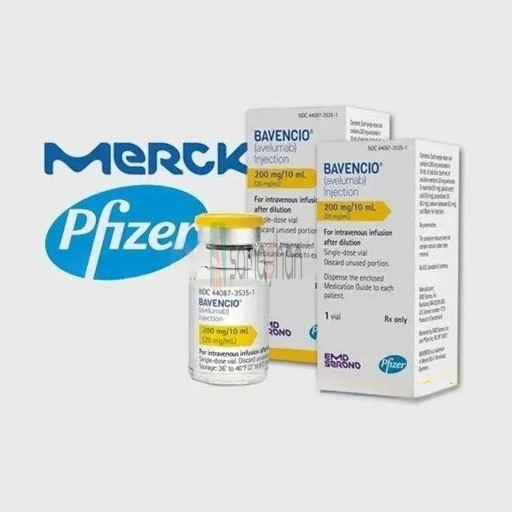
Bavencio 20 mg/ml is a Product of the Generic Avelumab
Bavencio 20 mg/ml belongs to the generic category of Avelumab. This medicine should be used according to a doctor's advice. We have provided detailed information about the uses, dosage, effectiveness, side effects, precautions, drug interactions, storage conditions, and other important details of Bavencio 20 mg/ml. Our goal is to present essential medicine information in one place for patients, caregivers, and healthcare professionals. To better understand Avelumab and ensure the safe use of this medicine, please read the information below carefully and consult a healthcare professional when necessary.
*Up to 10% Discount
(Depends on pharmacy)
Bavencio 20 mg/ml
Janata Traders (Mfg. by: Merck) · SC Injection
Avelumab
/ 200 mg vial
Description of Bavencio 20 mg/ml
Bavencio 20 mg/ml may be available as a prescription or over-the-counter medicine, depending on local regulations and medical recommendations. It is used for the treatment and management of specific conditions or symptoms. The way this medicine is used may vary depending on the patient's condition and the advice of a healthcare provider. Detailed information about the approved uses, therapeutic applications, and other relevant details of Bavencio 20 mg/ml is provided below to help users gain a clear understanding of this medicine.
What Is Bavencio 20 mg/ml Indications and Uses?
Metastatic Merkel Cell Carcinoma: Avelumab is indicated for the treatment of adults and pediatric patients 12 years and older with metastatic Merkel cell carcinoma (MCC).Locally Advanced or Metastatic Urothelial Carcinoma-
First-Line Maintenance Treatment of Urothelial Carcinoma: Avelumab is indicated for the maintenance treatment of patients with locally advanced or metastatic urothelial carcinoma (UC) that has not progressed with first-line platinum-containing chemotherapy. ... Read moreMetastatic Merkel Cell Carcinoma: Avelumab is indicated for the treatment of adults and pediatric patients 12 years and older with metastatic Merkel cell carcinoma (MCC).Locally Advanced or Metastatic Urothelial Carcinoma-
First-Line Maintenance Treatment of Urothelial Carcinoma: Avelumab is indicated for the maintenance treatment of patients with locally advanced or metastatic urothelial carcinoma (UC) that has not progressed with first-line platinum-containing chemotherapy.
Previously-treated Urothelial Carcinoma: Avelumab is indicated for the treatment of patients with locally advanced or metastatic urothelial carcinoma (UC) who:
Have disease progression during or following platinum-containing chemotherapy.
Have disease progression within 12 months of neoadjuvant or adjuvant treatment with platinum-containing chemotherapy.
Advanced Renal Cell Carcinoma: Avelumab in combination with axitinib is indicated for the first-line treatment of patients with advanced renal cell carcinoma (RCC).
Pharmacology (Source, Chemical and Physical Composition) Of Bavencio 20 mg/ml
PD-L1 may be expressed on tumor cells and tumor-infiltrating immune cells and can contribute to the inhibition of the anti-tumor immune response in the tumor microenvironment. Binding of PD-L1 to the PD-1 and B7.1 receptors found on T cells and antigen presenting cells suppresses cytotoxic T-cell activity, T-cell proliferation, and cytokine production. Avelumab binds PD-L1 and blocks the interaction between PD-L1 and its receptors PD-1 and B7.1. This interaction releases the inhibitory effects of PD-L1 on the immune response resulting in the restoration of immune responses, including anti-tumor immune responses. Avelumab has also been shown to induce antibody-dependent cell-mediated cytotoxicity (ADCC) in vitro. In syngeneic mouse tumor models, blocking PD-L1 activity resulted in decreased tumor growth.
Dosage And Administration of Bavencio 20 mg/ml
Premedication: Premedicate patients with an antihistamine and with acetaminophen prior to the first 4 infusions of Avelumab. Premedication should be administered for subsequent Avelumab doses based upon clinical judgment and presence/severity of prior infusion reactions.Recommended Dosage for MCC: The recommended dosage of Avelumab is 800 mg administered as an intravenous infusion over 60 minutes every 2 weeks until disease progression or unacceptable toxicity.Recommended Dosage for UC: The recommended dosage of Avelumab is 800 mg administered as an intravenous infusion over 60 minutes every 2 weeks until disease progression or unacceptable toxicity.Recommended Dosage for RCC: The recommended dosage of Avelumab is 800 mg administered as an intravenous infusion over 60 minutes every 2 weeks in combination with axitinib 5 mg orally taken twice daily (12 hours apart) with or without food until disease progression or unacceptable toxicity. When axitinib is used in combination with Avelumab, dose escalation of axitinib above the initial 5 mg dose may be considered at intervals of two weeks or longer.
Side Effects of Bavencio 20 mg/ml
The following clinically significant adverse reactions are:
Severe and fatal immune-mediated adverse reactions
Infusion-related reactions
Complications of allogeneic HSCT
Major adverse cardiovascular events
Use During Pregnancy and Lactation
Based on its mechanism of action, Avelumab can cause fetal harm when administered to a pregnant woman. There are no available data on the use of Avelumab in pregnant women. Animal studies have demonstrated that inhibition of the PD-1/PD-L1 pathway can lead to increased risk of immune-mediated rejection of the developing fetus resulting in fetal death. Human IgG1 immunoglobulins (IgG1) are known to cross the placenta. Therefore, Avelumab has the potential to be transmitted from the mother to the developing fetus. If this drug is used during pregnancy, or if the patient becomes pregnant while taking this drug, advise the patient of the potential risk to a fetus.There is no information regarding the presence of avelumab in human milk, the effects on the breastfed infant, or the effects on milk production. Since many drugs including antibodies are excreted in human milk, advise a lactating woman not to breastfeed during treatment and for at least one month after the last dose of Avelumab due to the potential for serious adverse reactions in breastfed infants.
Precautions And Warnings for Bavencio 20 mg/ml
Immune-Mediated Adverse Reactions-
Immune-mediated adverse reactions, which may be severe or fatal, can occur in any organ system or tissue, including the following: immunemediated pneumonitis, immune-mediated colitis, immune mediated hepatitis, immune-mediated endocrinopathies, immune-mediated nephritis with renal dysfunction, immune-mediated dermatologic adverse reactions, and may result in solid organ transplant rejection.
Monitor for early identification and management. Evaluate liver enzymes, creatinine, and thyroid function at baseline and periodically during treatment.
Withhold or permanently discontinue based on severity and type of reaction.
Infusion-related reactions: Interrupt, slow the rate of infusion, or permanently discontinue Avelumab based on severity of reaction.Complications of allogeneic HSCT: Fatal and other serious complications can occur in patients who receive allogeneic HSCT before or after being treated with a PD-1/PD-L1 blocking antibody.Major adverse cardiovascular events: Optimize management of cardiovascular risk factors. Discontinue Avelumab in combination with axitinib for Grade 3-4 events.Embryo-fetal toxicity: Avelumab can cause fetal harm. Advise females of reproductive potential of the potential risk to a fetus and use of effective contraception.
Use In Special Populations
Pediatric Use: The safety and effectiveness of Avelumab have been established in pediatric patients aged 12 years and older for metastatic MCC. Use of Avelumab in this age group is supported by evidence from adequate and well-controlled studies of Avelumab in adults with additional population pharmacokinetic data demonstrating that age and body weight had no clinically meaningful effect on the steady state exposure of avelumab, that drug exposure is generally similar between adults and pediatric patients age 12 years and older for monoclonal antibodies, and that the course of MCC is sufficiently similar in adult and pediatric patients to allow extrapolation of data in adults to pediatric patients. The recommended dose in pediatric patients 12 years of age or greater is the same as that in adults.
Storage Conditions of It
Keep below 25°C temperature, away from light & moisture. Keep out of the reach of children.
Data Source: Data source of Indications and Usages, Pharmacology, Dosage & Administration, Drug Interactions, Side Effects, Use during Pregnancy & Lactation, Precautions & Warnings, Use in Special Populations, Therapeutic Class, and Storage Conditions is the concerned medicine company or respective organization.
Alternative Medicines
⚠ Disclaimer
The information provided on All Samadhan is intended for general informational purposes only and is prepared based on our best practices. It is not a substitute for professional medical advice, diagnosis, or treatment. While we strive to keep the information accurate and up to date, we do not guarantee its completeness or accuracy. The absence of specific information or warnings about any medicine or service should not be considered as an assurance or endorsement by All Samadhan. All Samadhan shall not be held responsible for any consequences arising from the use of this information. We strongly recommend consulting a qualified healthcare professional or physician for any medical concerns, questions, or clarifications.All Samadhan is a digital healthcare software platform operated by MS Genius Experts. We provide technology solutions for pharmacies and healthcare providers; we are not a direct seller or dispenser of prescription medicines

N.B.: All Samadhan is a digital healthcare software platform operated by MS Genius Experts. We provide technology solutions for pharmacies and healthcare providers; we are not a direct seller or dispenser of prescription medicines.
Copyright © All Samadhan - Operated by M/S. Genius Experts | All Rights Reserved
DBID
Registration ID: 176322642
Trade License: TRAD/DNCC/040904/2023