
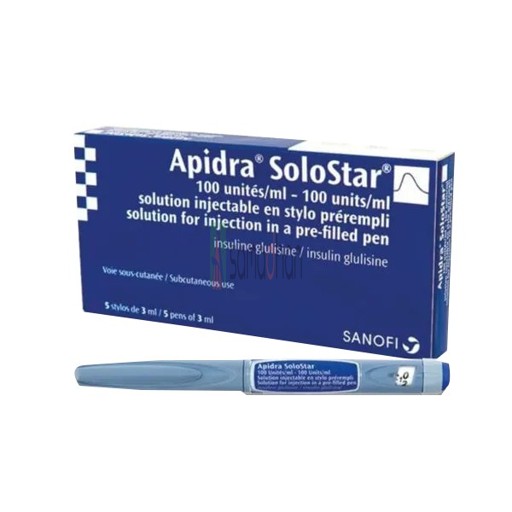
Apidra SoloStar 100 unit/ml is a Product of the Generic Insulin Glulisine
Apidra SoloStar 100 unit/ml belongs to the generic category of Insulin Glulisine. This medicine should be used according to a doctor's advice. We have provided detailed information about the uses, dosage, effectiveness, side effects, precautions, drug interactions, storage conditions, and other important details of Apidra SoloStar 100 unit/ml. Our goal is to present essential medicine information in one place for patients, caregivers, and healthcare professionals. To better understand Insulin Glulisine and ensure the safe use of this medicine, please read the information below carefully and consult a healthcare professional when necessary.
*Up to 10% Discount
(Depends on pharmacy)
Apidra SoloStar 100 unit/ml
Synovia Pharma PLC. · SC Injection
Insulin Glulisine
/ Piece
Description of Apidra SoloStar 100 unit/ml
Apidra SoloStar 100 unit/ml may be available as a prescription or over-the-counter medicine, depending on local regulations and medical recommendations. It is used for the treatment and management of specific conditions or symptoms. The way this medicine is used may vary depending on the patient's condition and the advice of a healthcare provider. Detailed information about the approved uses, therapeutic applications, and other relevant details of Apidra SoloStar 100 unit/ml is provided below to help users gain a clear understanding of this medicine.
What Is Apidra SoloStar 100 unit/ml Indications and Uses?
Insulin Glulisine is a rapid-acting human insulin analog indicated to improve glycemic control in adults and pediatric patients with diabetes mellitus.
Pharmacology (Source, Chemical and Physical Composition) Of Apidra SoloStar 100 unit/ml
Regulation of glucose metabolism is the primary activity of insulins and insulin analogs, including insulin glulisine. Insulins lower blood glucose by stimulating peripheral glucose uptake by skeletal muscle and fat, and by inhibiting hepatic glucose production. Insulins inhibit lipolysis and proteolysis and enhance protein synthesis.
Dosage And Administration of Apidra SoloStar 100 unit/ml
Individualize and adjust the dosage of insulin glulisine based on the route of administration, individual's metabolic needs, blood glucose monitoring results, and glycemic control goal.Dosage adjustments may be needed when switching from another insulin, with changes in physical activity, changes in concomitant medications, changes in meal patterns, changes in renal or hepatic function or during acute illness.Subcutaneous Injection:
Inject within 15 minutes before a meal or within 20 minutes after starting a meal into the abdomen, thigh, or upper arm.
Rotate injection sites within the same region to reduce the risk of lipodystrophy and localized cutaneous amyloidosis.
Should generally be used in regimens with intermediate or long-acting insulin.
Continuous Subcutaneous Infusion (Insulin Pump):
Administer by continuous subcutaneous infusion using an insulin pump in a region recommended in the instructions from the pump manufacturer.
Rotate infusion sites within the same region to reduce the risk of lipodystrophy and localized cutaneous amyloidosis.
Do not dilute or mix insulins in external insulin pumps.
Intravenous Administration: Administer only under medical supervision after diluting to concentrations from 0.05 to 1 unit/mL insulin glulisine in 0.9% sodium chloride injection, USP using polyvinyl chloride infusion bags.
Drug Interactions of Apidra SoloStar 100 unit/ml
Drugs that Increase Hypoglycemia Risk or Increase or Decrease Blood Glucose Lowering Effect: Adjustment of dosage may be needed; closely monitor blood glucose.Drugs that Blunt Hypoglycemia Signs and Symptoms (e.g., beta-blockers, clonidine, guanethidine, and reserpine): Increased frequency of glucose monitoring may be required.
Side Effects of Apidra SoloStar 100 unit/ml
Adverse reactions commonly associated with APIDRA include hypoglycemia, allergic reactions, injection site= reactions, lipodystrophy, pruritus, rash, and weight gain.
Use During Pregnancy and Lactation
Pregnancy Category C. Animal reproduction studies have shown an adverse effect on the fetus and there are no adequate and well-controlled studies in humans, but potential benefits may warrant use of the drug in pregnant women despite potential risksNursing mothers: It is unknown whether insulin glulisine is excreted in human milk. Because many drugs are excreted in human milk, caution should be exercised when Insulin Glulisine is administered to a nursing woman. Use of Insulin Glulisine is compatible with breastfeeding, but women with diabetes who are lactating may require adjustments of their insulin doses.
Precautions And Warnings for Apidra SoloStar 100 unit/ml
Never share an insulin glulisine injection pen between patients, even if the needle is changed.Hyperglycemia or Hypoglycemia with Changes in Insulin Regimen: Make changes to a patient's insulin regimen (e.g., insulin strength, manufacturer, type, injection site or method of administration) under close medical supervision with increased frequency of blood glucose monitoring.Hypoglycemia: May be life-threatening. Increase frequency of glucose monitoring with changes to: insulin dosage, coadministered glucose lowering medications, meal pattern, physical activity; and in patients with renal impairment or hepatic impairment or hypoglycemia unawareness.Hypoglycemia Due to Medication Errors: Accidental mix-ups between insulin products can occur. Instruct patients to check insulin labels before injection.Hypokalemia: May be life-threatening. Monitor potassium levels in patients at risk for hypokalemia and treat if indicated.Hypersensitivity and Allergic Reactions: Severe, life-threatening, generalized allergy, including anaphylaxis, can occur. Discontinue insulin glulisine, monitor and treat if indicated.Fluid Retention and Heart Failure Can Occur with Concomitant Use of Thiazolidinediones (TZDs): Observe for signs and symptoms of heart failure; consider dosage reduction or discontinuation of TZD if heart failure occurs.Hyperglycemia and Ketoacidosis Due to Insulin Pump Device Malfunction: Monitor glucose and administer insulin glulisine by subcutaneous injection if pump malfunction occurs.
Use In Special Populations
Pediatric use: The safety and effectiveness of subcutaneous injections of Insulin Glulisine have been established in pediatric patients (age 4 to 17 years) with type 1 diabetes. Insulin Glulisine has not been studied in pediatric patients with type 1 diabetes younger than 4 years of age and in pediatric patients with type 2 diabetes. As in adults, the dosage of Insulin Glulisine must be individualized in pediatric patients based on metabolic needs and frequent monitoring of blood glucoseGeriatric use: In clinical trials (n=2408), Insulin Glulisine was administered to 147 patients ≥65 years of age and 27 patients ≥75 years of age. The majority of this small subset of elderly patients had type 2 diabetes. The change in HbA1c values and hypoglycemia frequencies did not differ by age. Nevertheless, caution should be exercised when Insulin Glulisine is administered to geriatric patients.Renal impairment: Dose reduction may be needed.Hepatic impairment: Dose reduction may be needed.
Therapeutic Class
Rapid Acting Insulin
Storage Conditions of It
Unopened Insulin Glulisine vials and cartridge systems should be stored in a refrigerator 2°C-8°C. Protect from light. Insulin Glulisine should not be stored in the freezer and it should not be allowed to freeze. Discard if it has been frozen. Unopened vials/cartridge systems not stored in a refrigerator must be used within 28 days.Opened vials, whether or not refrigerated, must be used within 28 days. If refrigeration is not possible, the open vial in use can be kept unrefrigerated for up to 28 days away from direct heat and light, as long as the temperature is not greater than 25°C.
Data Source: Data source of Indications and Usages, Pharmacology, Dosage & Administration, Drug Interactions, Side Effects, Use during Pregnancy & Lactation, Precautions & Warnings, Use in Special Populations, Therapeutic Class, and Storage Conditions is the concerned medicine company or respective organization.
Alternative Medicines
⚠ Disclaimer
The information provided on All Samadhan is intended for general informational purposes only and is prepared based on our best practices. It is not a substitute for professional medical advice, diagnosis, or treatment. While we strive to keep the information accurate and up to date, we do not guarantee its completeness or accuracy. The absence of specific information or warnings about any medicine or service should not be considered as an assurance or endorsement by All Samadhan. All Samadhan shall not be held responsible for any consequences arising from the use of this information. We strongly recommend consulting a qualified healthcare professional or physician for any medical concerns, questions, or clarifications.All Samadhan is a digital healthcare software platform operated by MS Genius Experts. We provide technology solutions for pharmacies and healthcare providers; we are not a direct seller or dispenser of prescription medicines

N.B.: All Samadhan is a digital healthcare software platform operated by MS Genius Experts. We provide technology solutions for pharmacies and healthcare providers; we are not a direct seller or dispenser of prescription medicines.
Copyright © All Samadhan - Operated by M/S. Genius Experts | All Rights Reserved
DBID
Registration ID: 176322642
Trade License: TRAD/DNCC/040904/2023