
Anespine 0.5%+8% is a Product of the Generic Bupivacaine Hydrochloride + Dextrose
Anespine 0.5%+8% belongs to the generic category of Bupivacaine Hydrochloride + Dextrose. This medicine should be used according to a doctor's advice. We have provided detailed information about the uses, dosage, effectiveness, side effects, precautions, drug interactions, storage conditions, and other important details of Anespine 0.5%+8%. Our goal is to present essential medicine information in one place for patients, caregivers, and healthcare professionals. To better understand Bupivacaine Hydrochloride + Dextrose and ensure the safe use of this medicine, please read the information below carefully and consult a healthcare professional when necessary.
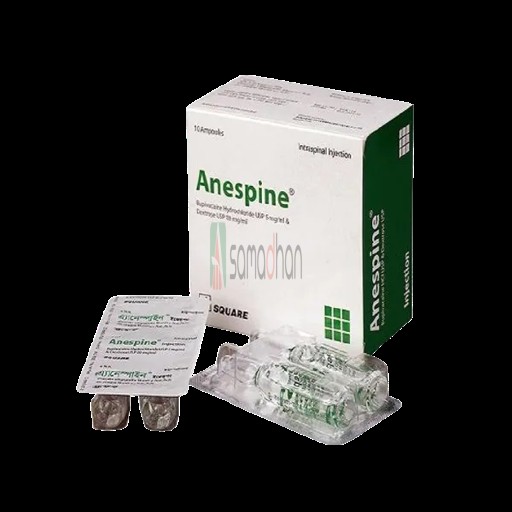
*Up to 10% Discount
(Depends on pharmacy)
Anespine 0.5%+8%
Square Pharmaceuticals PLC · Intraspinal Injection
Bupivacaine Hydrochloride + Dextrose
/ Piece
Description of Anespine 0.5%+8%
Anespine 0.5%+8% may be available as a prescription or over-the-counter medicine, depending on local regulations and medical recommendations. It is used for the treatment and management of specific conditions or symptoms. The way this medicine is used may vary depending on the patient's condition and the advice of a healthcare provider. Detailed information about the approved uses, therapeutic applications, and other relevant details of Anespine 0.5%+8% is provided below to help users gain a clear understanding of this medicine.
What Is Anespine 0.5%+8% Indications and Uses?
This combination intraspinal injection is indicated for-
lower abdominal surgery (including Caesarean section), urological and lower limb, including hip surgery, lasting 1.5 to 3 hours.
intrathecal (subarachnoid, spinal) anesthesia for surgical and obstetrical procedures.
This ... Read moreThis combination intraspinal injection is indicated for-
lower abdominal surgery (including Caesarean section), urological and lower limb, including hip surgery, lasting 1.5 to 3 hours.
intrathecal (subarachnoid, spinal) anesthesia for surgical and obstetrical procedures.
This combination intraspinal injection produces motor blockade of the abdominal muscles makes the solution suitable for performance of abdominal surgery lasting 1.5-2 hours. The duration of motor blockade does not exceed the duration of analgesia.
Pharmacology (Source, Chemical and Physical Composition) Of Anespine 0.5%+8%
Bupivacaine is a long acting local anesthetic of the amide type. Bupivacaine spinal 5 mg/ml is a sterile non-glucose containing solution. Bupivacaine spinal has a rapid onset of action. The duration of analgesia is 3-5 hours in the lower thoracic and lumbar segments, which makes Bupivacaine spinal especially suitable for long lasting procedures in the lower limbs. The muscular relaxation of the lower limbs is profound, and lasts 3-4 hours, being somewhat shorter than the duration of the sensory blockade. The circulatory effects of Bupivacaine spinal are similar or less than those seen with other spinal agents. Bupivacaine spinal is well tolerated by all tissues with which it comes in contact.
Dosage And Administration of Anespine 0.5%+8%
The following dosage recommendations should be regarded as a guide for use in the average adult: Spinal anesthesia for surgery: 2-4 ml (10-20 mg Bupivacaine hydrochloride) The patient's physical status and concomitant medication should be considered when deciding the dose, and the lowest dose required for adequate anesthesia should be used. Duration varies with dose, while segmental spread may be difficult to predict, especially with the isobaric (plain) solution. The dose should be reduced in the elderly and in patients in the late stages of pregnancy.Pediatrics: Bupivacaine may be used in children. One of the differences between small children and adults is a relatively high CSF volume in infants and neonates, requiring a relatively larger dose/kg to produce the same level of block as compared to adults.
<5 kg: 0.40-0.50 mg/kg
5 to 15 kg: 0.30-0.40 mg/kg
15 to 40 kg: 0.25-0.30 mg/kg
Drug Interactions of Anespine 0.5%+8%
Bupivacaine should be used with care in patients receiving antiarrhythmic drugs with local anaesthetic activity, as their toxic effects may be additive. Phenothiazines and Butyrophenones may reduce or reverse the pressor effect of epinephrine.
Side Effects of Anespine 0.5%+8%
The adverse reaction profile for Bupivacaine is similar to those for other long acting local anesthetics administered intrathecally. Adverse reactions caused by the drug per se are difficult to distinguish from the physiological effects of the nerve block (e.g. decrease in blood pressure, bradycardia, temporary urinary retention), events caused directly (e.g. nerve trauma) or indirectly (e.g. epidural abscess) by the needle puncture or events associated to cerebrospinal leakage.
Use During Pregnancy and Lactation
It is reasonable to assume that a large number of pregnant women and women of child-bearing age have been given Bupivacaine. No specific disturbances to the reproductive process have so far been reported, e.g. no increased incidence of malformations. It should be noted that the dose should be reduced in patients in the late stages of pregnancy. With recommended doses, Bupivacaine enters breast milk in such small quantities that there is generally no risk of affecting the breast-fed child. At maternal serum levels of up to 0.45 g/mL produced by the epidural use of Bupivacaine for vaginal delivery, Bupivacaine could not be detected in breast milk during the first 24 hours after delivery (detection limit 0.02 g/mL).
Precautions And Warnings for Anespine 0.5%+8%
Local anesthetics react with certain metals and cause the release of their respective ions which, if injected, may cause severe local irritation. The ampoules are designed for single use only; any unused portions of solutions should be discarded. The solution should be used immediately after opening the ampoule. Solutions showing discoloration should not be used.
Therapeutic Class
Regional anesthesia
Storage Conditions of It
Store at temperature not exceeding 30ºC in a dry place. Protect from light.
Data Source: Data source of Indications and Usages, Pharmacology, Dosage & Administration, Drug Interactions, Side Effects, Use during Pregnancy & Lactation, Precautions & Warnings, Use in Special Populations, Therapeutic Class, and Storage Conditions is the concerned medicine company or respective organization.
Alternative Medicines
⚠ Disclaimer
The information provided on All Samadhan is intended for general informational purposes only and is prepared based on our best practices. It is not a substitute for professional medical advice, diagnosis, or treatment. While we strive to keep the information accurate and up to date, we do not guarantee its completeness or accuracy. The absence of specific information or warnings about any medicine or service should not be considered as an assurance or endorsement by All Samadhan. All Samadhan shall not be held responsible for any consequences arising from the use of this information. We strongly recommend consulting a qualified healthcare professional or physician for any medical concerns, questions, or clarifications.All Samadhan is a digital healthcare software platform operated by MS Genius Experts. We provide technology solutions for pharmacies and healthcare providers; we are not a direct seller or dispenser of prescription medicines

N.B.: All Samadhan is a digital healthcare software platform operated by MS Genius Experts. We provide technology solutions for pharmacies and healthcare providers; we are not a direct seller or dispenser of prescription medicines.
Copyright © All Samadhan - Operated by M/S. Genius Experts | All Rights Reserved
DBID
Registration ID: 176322642
Trade License: TRAD/DNCC/040904/2023