
Acme's Mannitol 0.2 is a Product of the Generic Mannitol
Acme's Mannitol 0.2 belongs to the generic category of Mannitol. This medicine should be used according to a doctor's advice. We have provided detailed information about the uses, dosage, effectiveness, side effects, precautions, drug interactions, storage conditions, and other important details of Acme's Mannitol 0.2. Our goal is to present essential medicine information in one place for patients, caregivers, and healthcare professionals. To better understand Mannitol and ensure the safe use of this medicine, please read the information below carefully and consult a healthcare professional when necessary.
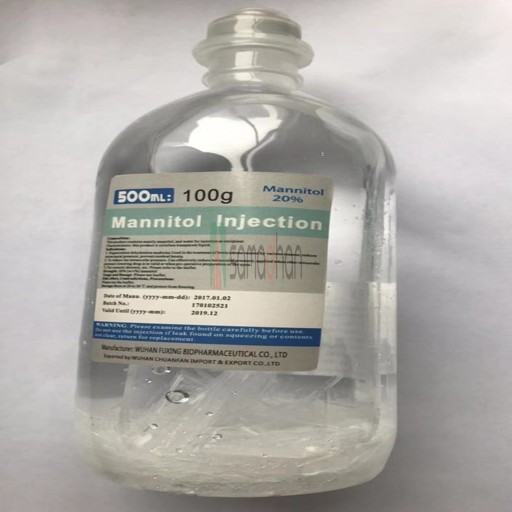
*Up to 10% Discount
(Depends on pharmacy)
Acme's Mannitol 0.2
ACME Laboratories Ltd. · IV Infusion
Mannitol
/ 500 ml bottle
Description of Acme's Mannitol 0.2
Acme's Mannitol 0.2 may be available as a prescription or over-the-counter medicine, depending on local regulations and medical recommendations. It is used for the treatment and management of specific conditions or symptoms. The way this medicine is used may vary depending on the patient's condition and the advice of a healthcare provider. Detailed information about the approved uses, therapeutic applications, and other relevant details of Acme's Mannitol 0.2 is provided below to help users gain a clear understanding of this medicine.
What Is Acme's Mannitol 0.2 Indications and Uses?
Mannitol is principally used by IV infusion as an osmotic diuretic to preserve renal function in acute renal failure and to reduce raised intracranial and intraocular pressure. Mannitol is also used as an irrigating solution to prevent hemolysis and hemoglobin buildup during transurethral prostatic ... Read moreMannitol is principally used by IV infusion as an osmotic diuretic to preserve renal function in acute renal failure and to reduce raised intracranial and intraocular pressure. Mannitol is also used as an irrigating solution to prevent hemolysis and hemoglobin buildup during transurethral prostatic resection. It is useful in the management of acute drug poisoning where a route of elimination is through kidney. Besides these, it is also used in symptomatic relief of edema, reperfusion injury, termination of pregnancy, and bowel preparation. So, Mannitol is indicated in-
Renal insufficiency
Reperfusion injury
Raised intracranial pressure
Bladder irrigation
Raised intraocular pressure
Bowel preparation
Edematous status
As a prophylactic in renal failure
Management of poisoning
Termination of Pregnancy
Dosage And Administration of Acme's Mannitol 0.2
The adult dose of Mannitol ranges from 50 to 100 gm by IV infusion. The rate of administration is usually adjusted to maintain a urine flow of at least 30 to 50 ml/hr. Total dosage, concentration and the rate of administration depends on fluid requirement, urinary output and the severity of the condition being treatedRenal insufficiency-
Adults: 50 to 100 g of Mannitol administered at a rate adjusted to maintain a urine flow of at least 30 to 50 ml/hr.
Children: 2 gm/kg or 60 gm/m2 of body surface area administered over a period of 2 to 6 hrs.
Cerebral edema, elevated intracranial pressure, elevated intraocular pressure, Glaucoma-
Adults: 1.5 to 2 gm/kg administered over a period of 30 to 60 minutes.
Children: 1 to 2 gm/kg body wt. or 30 to 60 gm/m2 of body surface area administered over a period of 30 to 60 mins.
Adjunctive therapy for removal of toxic substances-
Adults: 50 to 200 g of Mannitol administered at a rate adjust to maintain a urine flow of at least 100 to 500 ml/hr.
Children: 2 gm/kg or 60 gm/m2 of body surface area
For termination of pregnancy 50 gm of Mannitol (250 ml of Mannitol) is instilled into the amniotic cavity which induces abortion in a high proportion of pregnancies.
Side Effects of Acme's Mannitol 0.2
The most common side effects associated with Mannitol intravenous infusion is fluid and electrolytes imbalance including circulatory overload and acidosis at high doses. Other side effects include nausea, vomiting, thirst, headache, dizziness, fever, tachycardia, chest pain, hyponatraemia, dehydration, blurred vision, urticaria, and hypertension or hypotension.
Use During Pregnancy and Lactation
Safety of Mannitol intravenous infusion in pregnancy has not been established yet. No information is available on the excretion of mannitol in breast milk and should be administered after careful consideration of risk-benefit ratio.
Precautions And Warnings for Acme's Mannitol 0.2
Careful monitoring of rate of administration of Mannitol is necessary to avoid fluid and electrolyte imbalance and circulatory overloading. The infusion should be discontinued if the patient develops signs of progressive renal dysfunction, heart failure or pulmonary congestion. Mannitol should not be administered with whole blood. Infusion of fluid should be immediately discontinued if rigor arises from any reason during the process. Do not use if the solution is cloudy, contains particles or after expiry date.
Therapeutic Class
Osmotic diuretics
Storage Conditions of It
Mannitol should be stored at a temperature of 20° to 30°. Exposure to lower temperatures may cause deposition of crystals, which should be dissolved by warming the bottle in hot water for about 30 minutes. Cool to body temperature before using. If all crystals can not be dissolved, the solution should not be used. The content of open containers should be used promptly. Unused contents should be discarded.
Data Source: Data source of Indications and Usages, Pharmacology, Dosage & Administration, Drug Interactions, Side Effects, Use during Pregnancy & Lactation, Precautions & Warnings, Use in Special Populations, Therapeutic Class, and Storage Conditions is the concerned medicine company or respective organization.
Alternative Medicines
⚠ Disclaimer
The information provided on All Samadhan is intended for general informational purposes only and is prepared based on our best practices. It is not a substitute for professional medical advice, diagnosis, or treatment. While we strive to keep the information accurate and up to date, we do not guarantee its completeness or accuracy. The absence of specific information or warnings about any medicine or service should not be considered as an assurance or endorsement by All Samadhan. All Samadhan shall not be held responsible for any consequences arising from the use of this information. We strongly recommend consulting a qualified healthcare professional or physician for any medical concerns, questions, or clarifications.All Samadhan is a digital healthcare software platform operated by MS Genius Experts. We provide technology solutions for pharmacies and healthcare providers; we are not a direct seller or dispenser of prescription medicines

N.B.: All Samadhan is a digital healthcare software platform operated by MS Genius Experts. We provide technology solutions for pharmacies and healthcare providers; we are not a direct seller or dispenser of prescription medicines.
Copyright © All Samadhan - Operated by M/S. Genius Experts | All Rights Reserved
DBID
Registration ID: 176322642
Trade License: TRAD/DNCC/040904/2023