
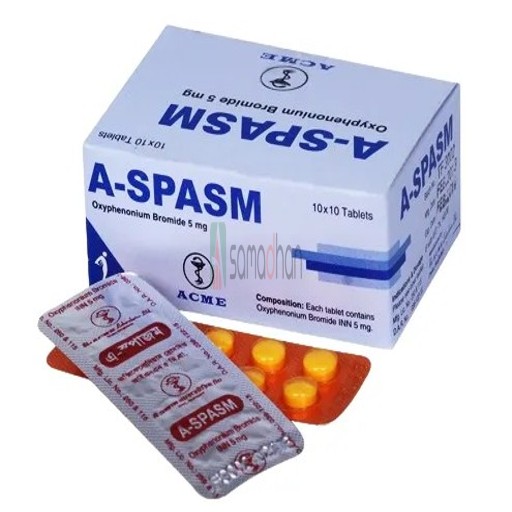
A-Spasm 5 mg is a Product of the Generic Oxyphenonium Bromide
A-Spasm 5 mg belongs to the generic category of Oxyphenonium Bromide. This medicine should be used according to a doctor's advice. We have provided detailed information about the uses, dosage, effectiveness, side effects, precautions, drug interactions, storage conditions, and other important details of A-Spasm 5 mg. Our goal is to present essential medicine information in one place for patients, caregivers, and healthcare professionals. To better understand Oxyphenonium Bromide and ensure the safe use of this medicine, please read the information below carefully and consult a healthcare professional when necessary.
*Up to 10% Discount
(Depends on pharmacy)
A-Spasm 5 mg
ACME Laboratories Ltd. · Tablet
Oxyphenonium Bromide
/ Piece
Description of A-Spasm 5 mg
A-Spasm 5 mg may be available as a prescription or over-the-counter medicine, depending on local regulations and medical recommendations. It is used for the treatment and management of specific conditions or symptoms. The way this medicine is used may vary depending on the patient's condition and the advice of a healthcare provider. Detailed information about the approved uses, therapeutic applications, and other relevant details of A-Spasm 5 mg is provided below to help users gain a clear understanding of this medicine.
What Is A-Spasm 5 mg Indications and Uses?
Oxyphenonium is indicated in Gastro-intestinal spasm and hypermotility, cardiospasm, esophagospasm, gastroduodenitis, spastic constipation, pylorospasm, peptic ulcer, spasm associated with carcinoma. Pain and spasm of the biliary tract. Pain and spasm of the urinary tract.
Pharmacology (Source, Chemical and Physical Composition) Of A-Spasm 5 mg
Oxyphenonium is an anticholinergic drug, a medication that reduces the effect of acetylcholine, a chemical released from nerves that stimulates muscles, by blocking the receptors for acetylcholine on smooth muscle (a type of muscle). It also has a direct relaxing effect on smooth muscle. Oxyphenonium is used to treat or prevent spasm in the muscles of the gastrointestinal tract in the irritable bowel syndrome. In addition, Oxyphenonium inhibits gastrointestinal propulsive motility and decreases gastric acid secretion and controls excessive pharyngeal, tracheal and bronchial secretions.
Dosage And Administration of A-Spasm 5 mg
Average adult dosage is 10 mg (2 tablets) 4 times daily for several days. Dosage may be reduced depending on patient's response or as directed by the physician.
Drug Interactions of A-Spasm 5 mg
Reduced gastric motility interferes with absorption of other drugs. Effects potentiated by other antimuscarinics including amantadine, some antihistamines, phenothiazines and TCA.
Side Effects of A-Spasm 5 mg
Common side effects are dryness of mouth, headache, palpitations, etc.
Use During Pregnancy and Lactation
Either studies in animals have revealed adverse effects on the foetus (teratogenic or embryocidal or other) and there are no controlled studies in women or studies in women and animals are not available. Drugs should be given only if the potential benefit justifies the potential risk to the foetus.
Precautions And Warnings for A-Spasm 5 mg
Children; elderly; benign prostatic hyperplasia; acute MI, cardiac failure, hypertension, thyrotoxicosis; pregnancy and lactation; fever; angle-closure glaucoma.
Therapeutic Class
Anticholinergics (antimuscarinics)/ Anti-spasmodics
Storage Conditions of It
Keep below 30°C temperature, away from light & moisture. Keep out of the reach of children.
Data Source: Data source of Indications and Usages, Pharmacology, Dosage & Administration, Drug Interactions, Side Effects, Use during Pregnancy & Lactation, Precautions & Warnings, Use in Special Populations, Therapeutic Class, and Storage Conditions is the concerned medicine company or respective organization.
Alternative Medicines
⚠ Disclaimer
The information provided on All Samadhan is intended for general informational purposes only and is prepared based on our best practices. It is not a substitute for professional medical advice, diagnosis, or treatment. While we strive to keep the information accurate and up to date, we do not guarantee its completeness or accuracy. The absence of specific information or warnings about any medicine or service should not be considered as an assurance or endorsement by All Samadhan. All Samadhan shall not be held responsible for any consequences arising from the use of this information. We strongly recommend consulting a qualified healthcare professional or physician for any medical concerns, questions, or clarifications.All Samadhan is a digital healthcare software platform operated by MS Genius Experts. We provide technology solutions for pharmacies and healthcare providers; we are not a direct seller or dispenser of prescription medicines

N.B.: All Samadhan is a digital healthcare software platform operated by MS Genius Experts. We provide technology solutions for pharmacies and healthcare providers; we are not a direct seller or dispenser of prescription medicines.
Copyright © All Samadhan - Operated by M/S. Genius Experts | All Rights Reserved
DBID
Registration ID: 176322642
Trade License: TRAD/DNCC/040904/2023